
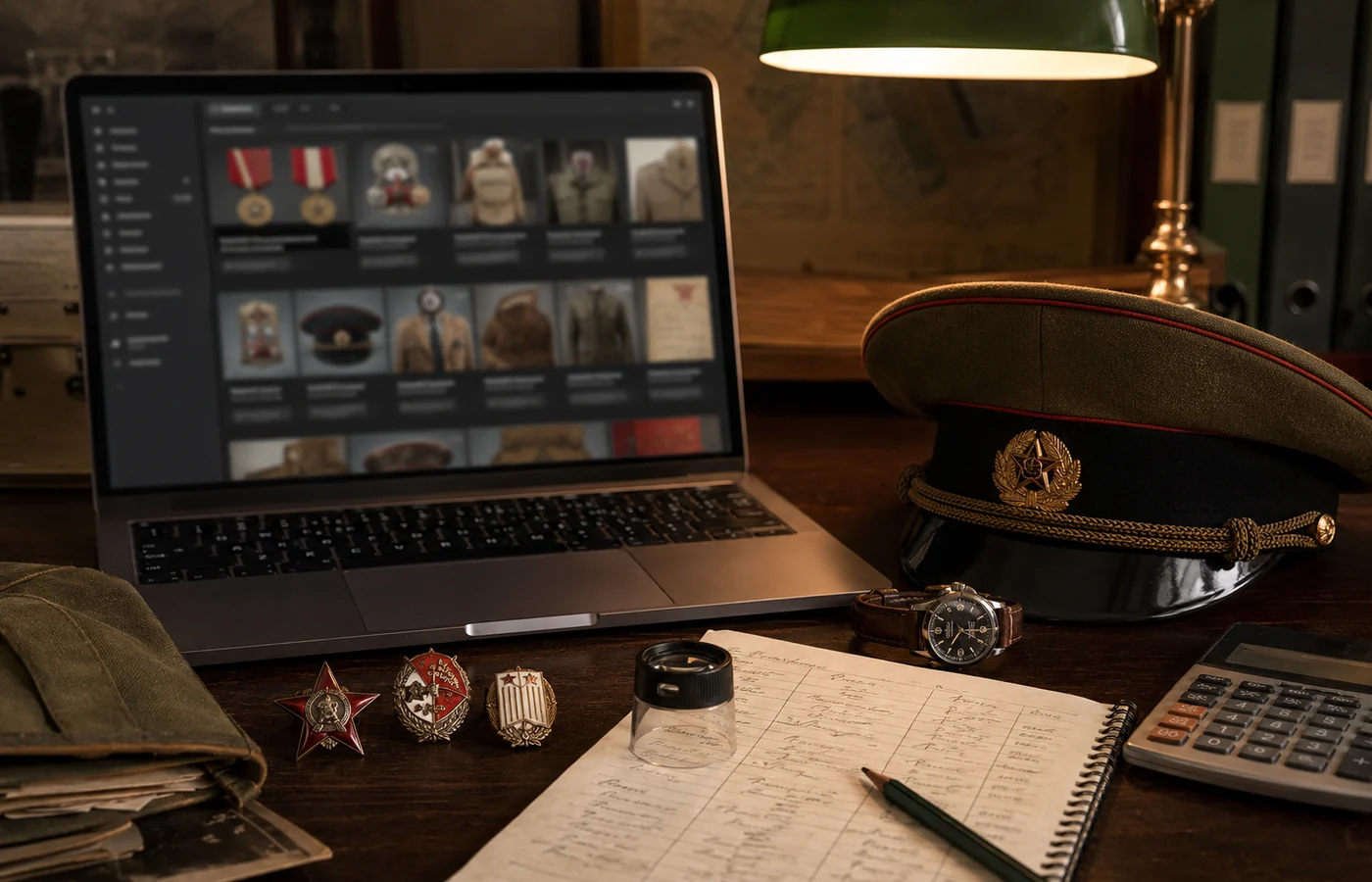
Build a comparable, not a wish list
A useful comparable matches object type, variant, condition, completeness and market. One spectacular sale is not a price guide.
Sold-comps worksheet
| Field | Record |
|---|---|
| Identification | Object, variant, date range and confidence level |
| Condition | Wear, damage, repairs, replaced parts and cleaning |
| Completeness | Original components, missing pieces, documents and case |
| Transaction | Sold date, final price, shipping and seller location |
| Evidence | Saved URL, screenshots and photographs |
Adjust cautiously
Do not use a rigid formula for provenance or condition. Explain each adjustment in words. If your conclusion depends on a single listing, the confidence should remain low.
Watch for selection bias
High asking prices remain visible. Good deals disappear. Unsold listings can be relisted repeatedly. Keep a dated research file so market changes are visible.
Marketplace research
Use listings as research leads, not proof of authenticity. Compare construction, markings, condition and provenance.