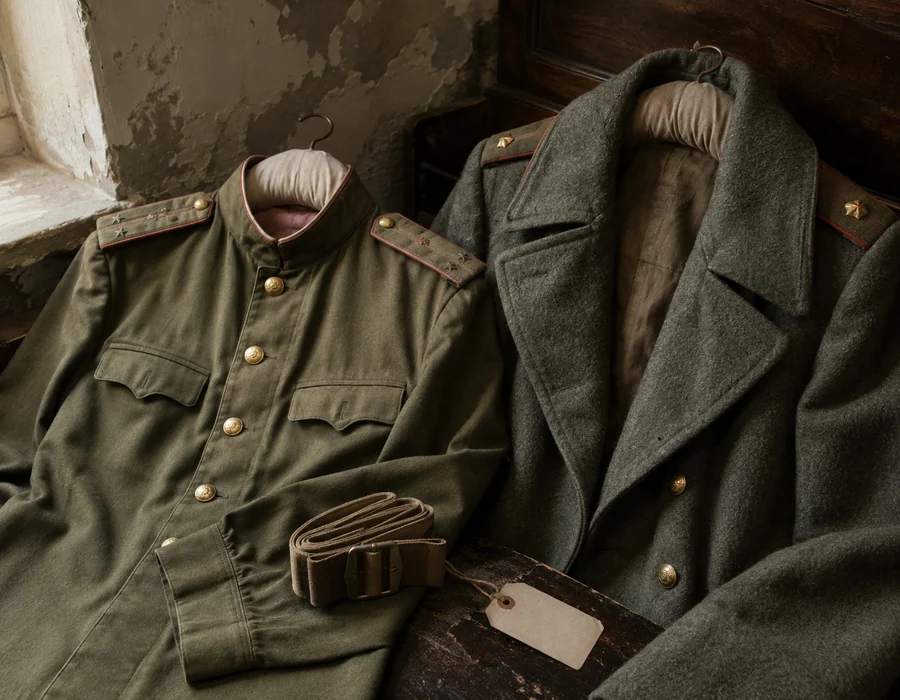
Uniforms and greatcoats
Read cut, cloth, stamps, shoulder boards and alterations before judging a uniform.
Open collector guide →
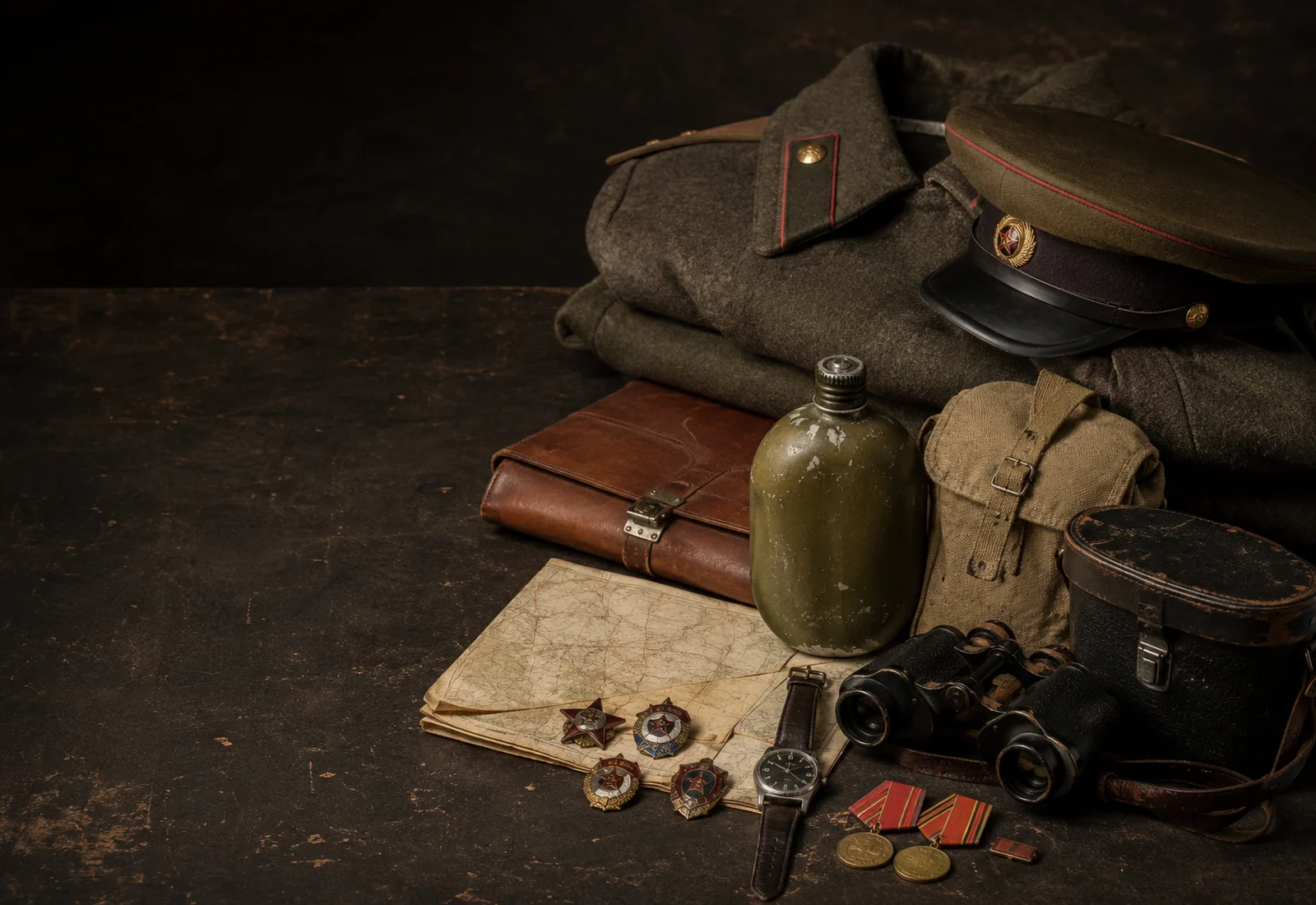
Soviet material culture · 1917–1991
A collector’s guide to Soviet uniforms, medals, field equipment, watches, optics, documents and everyday artifacts. Learn what markings mean, recognize reproductions and research actual marketplace results before buying.
Independent collector reference. Marketplace listings are unverified research leads.
Every category has its own failure points. A convincing badge, tunic, field pouch and map require different evidence, so the site routes each object through a category-specific inspection.
Read cut, cloth, stamps, shoulder boards and alterations before judging a uniform.
Open collector guide →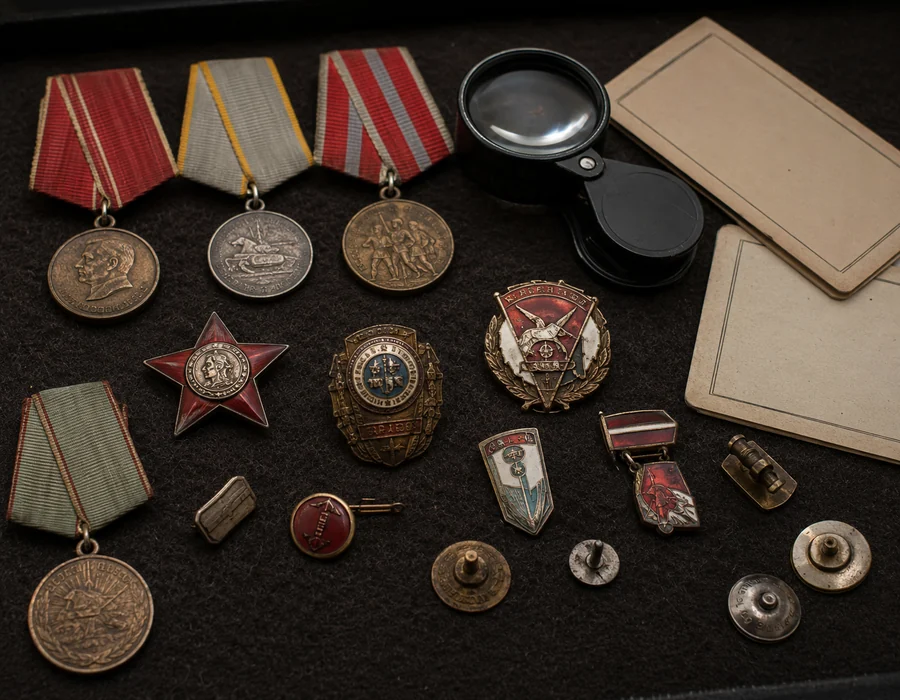
Separate official awards, qualification badges, commemoratives, fantasy pieces and later assemblies.
Open collector guide →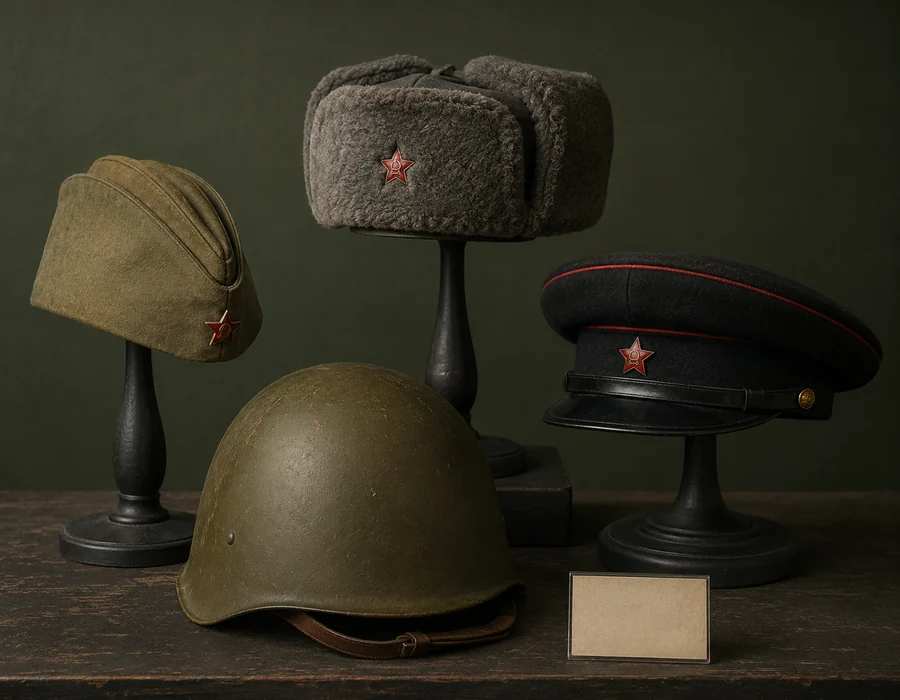
Compare profiles, liners, sweatbands, size stamps, insignia and repainting.
Open collector guide →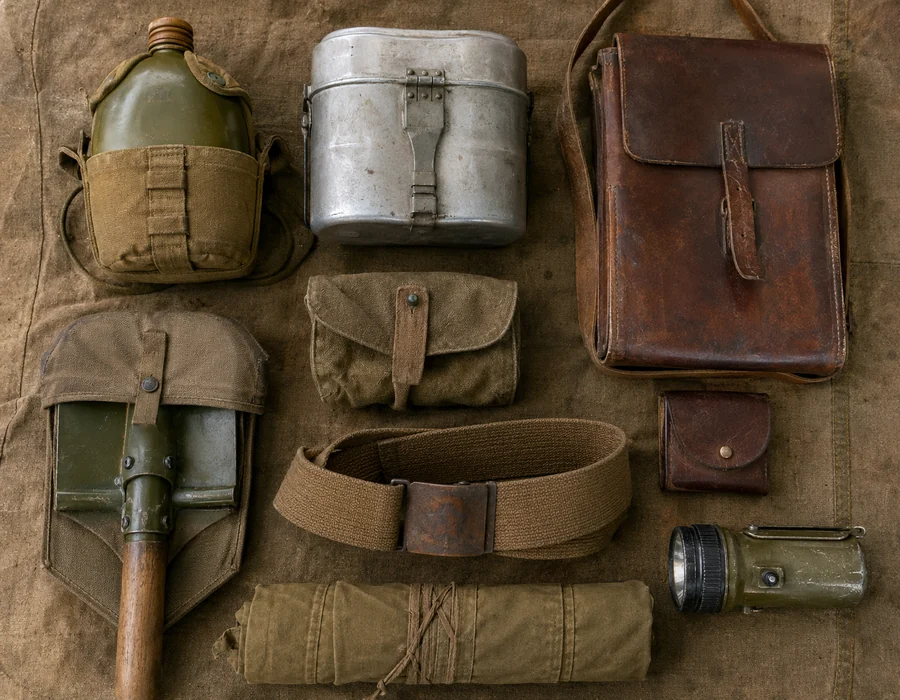
Evaluate canvas, leather, hardware, repainting, completeness and post-Soviet reuse.
Open collector guide →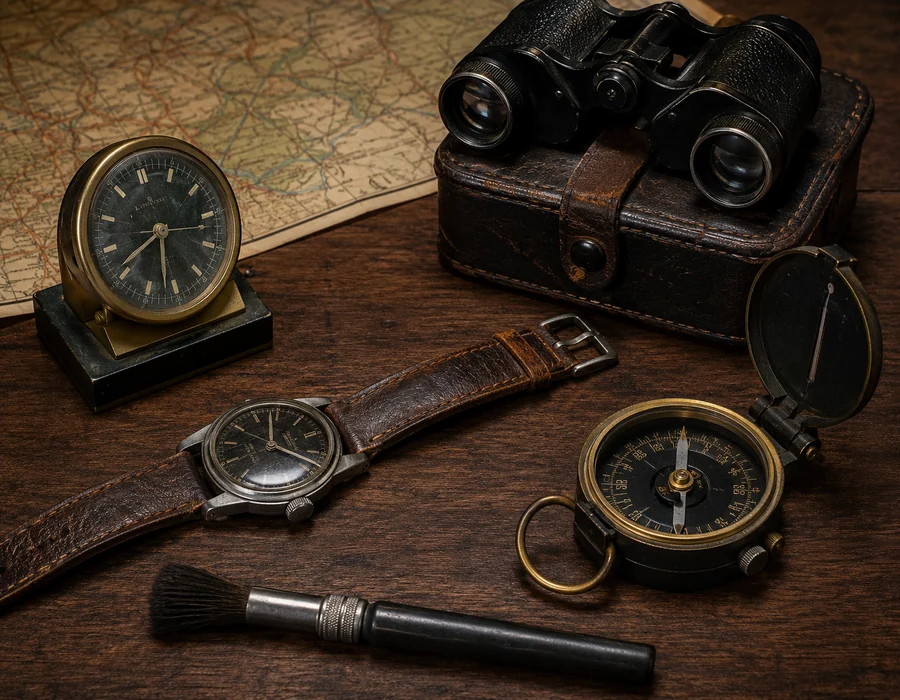
Research movements, cases, serial areas, service marks, lenses and instrument condition.
Open collector guide →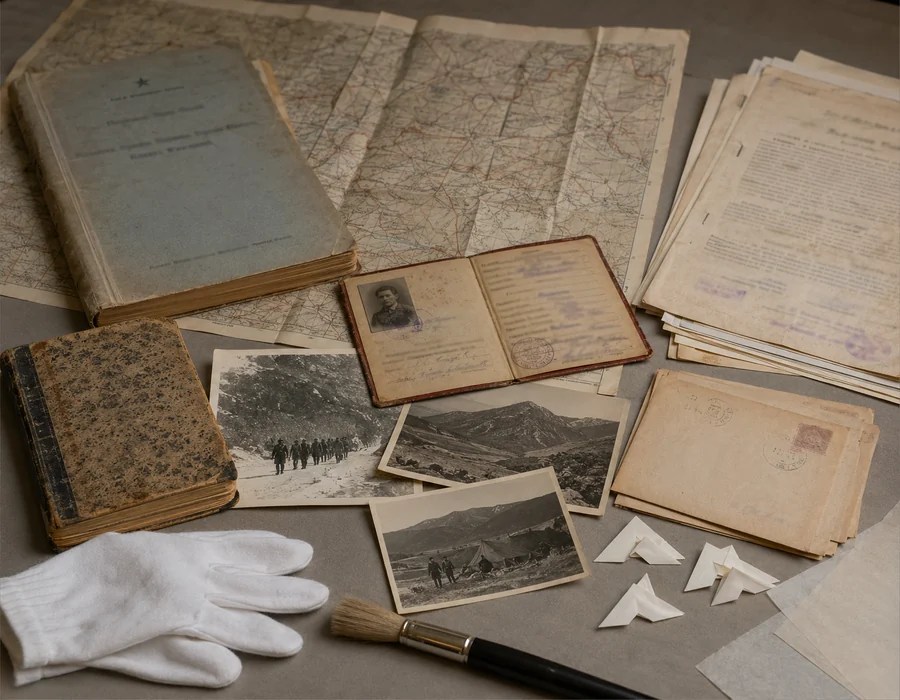
Handle fragile paper correctly and read stamps, dates, signatures and institutional context.
Open collector guide →Object finder
Build a precise research phrase from the object type, probable period and visible clues. Open current listings to study supply, then sold listings to see what buyers actually accepted.
Identification desk
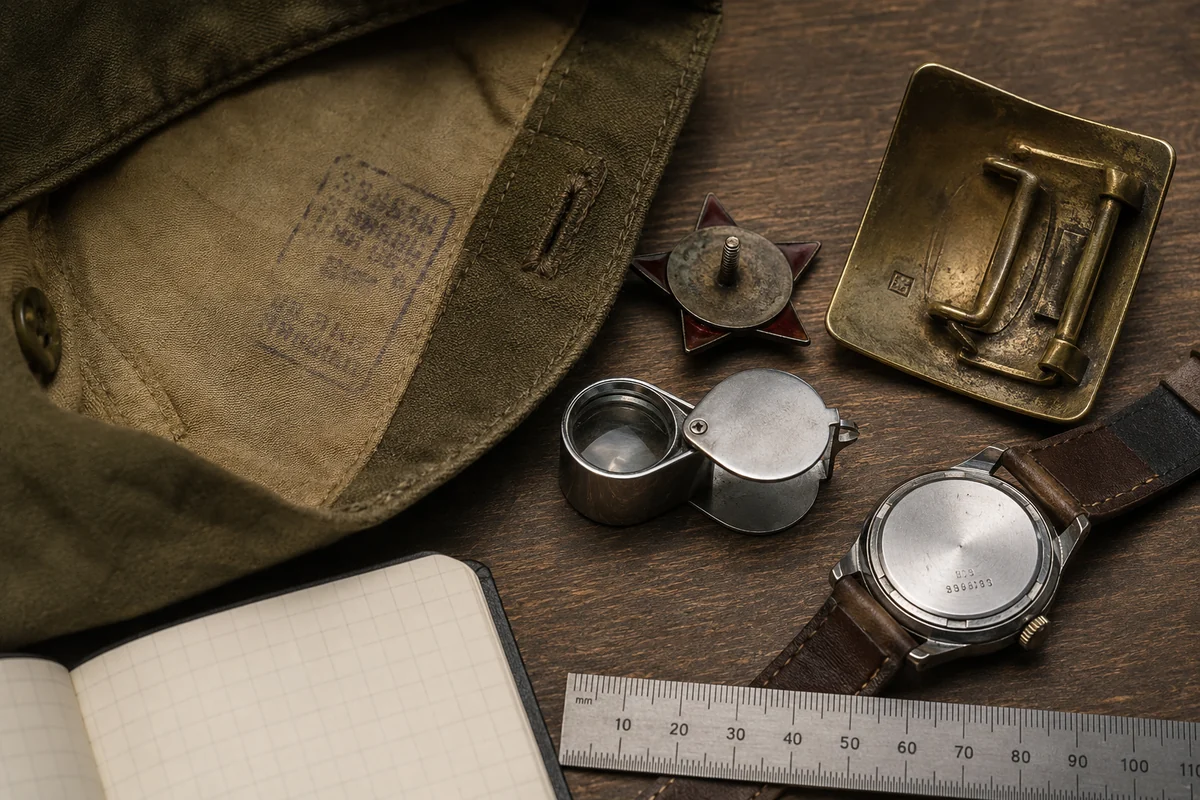
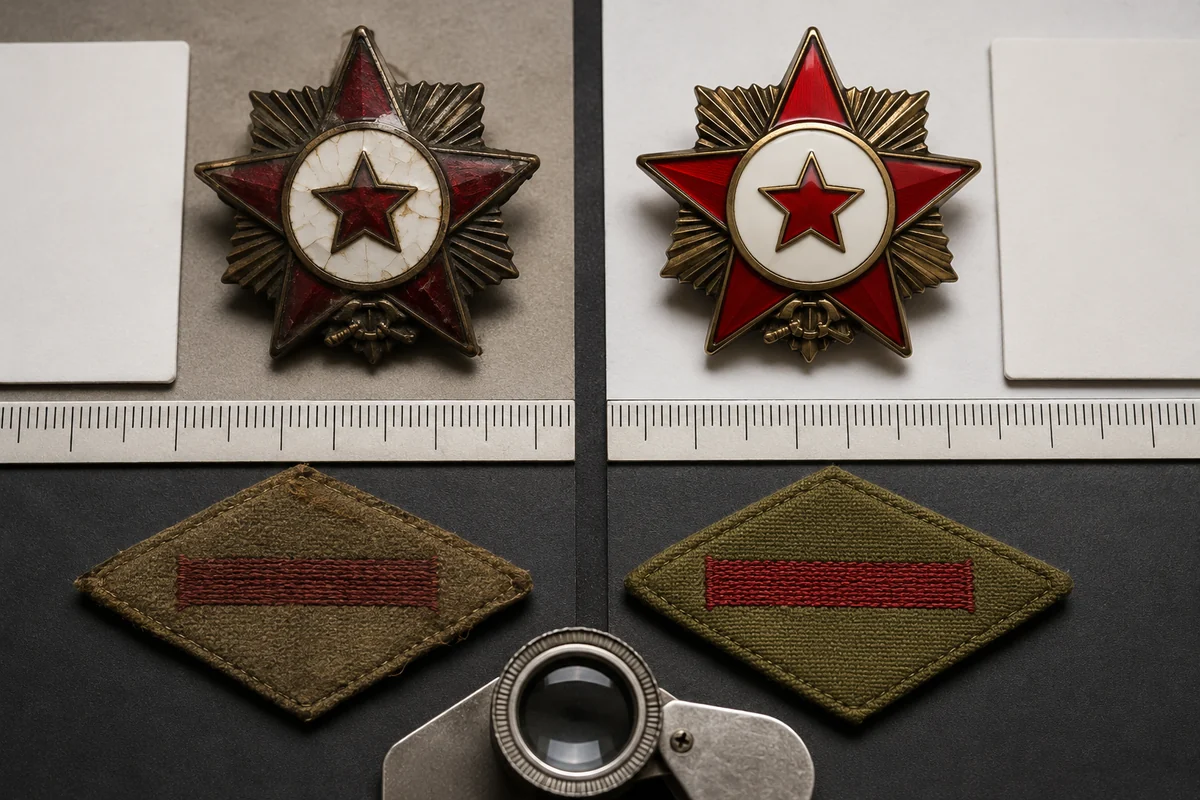
A stamp or serial number can narrow the search, but it rarely proves an object by itself. Record exactly where each mark appears, then compare the fabric, hardware, stitching, finish and wear pattern.
Authentication
The most expensive mistakes are often made from a distance. Bright enamel, sharp detail and a persuasive seller can still conceal modern hardware, fresh thread, artificial wear or a genuine object assembled from unrelated parts.
Dates matter because cuts, materials, insignia systems and production pressures changed. Use this timeline as a starting point, not a shortcut.
Transitional forms, scarce paper and later copies require careful provenance.
Standardization expanded, but surviving objects still show variation.
High demand, repairs and later commemorative narratives complicate attribution.
Demobilization, redesign and institutional expansion shaped material culture.
Broad production supports collecting, but dates and branch details still matter.
Field modifications and vague seller labels require disciplined evidence.
Issue, surplus and post-Soviet use can overlap on the same object.
Value research
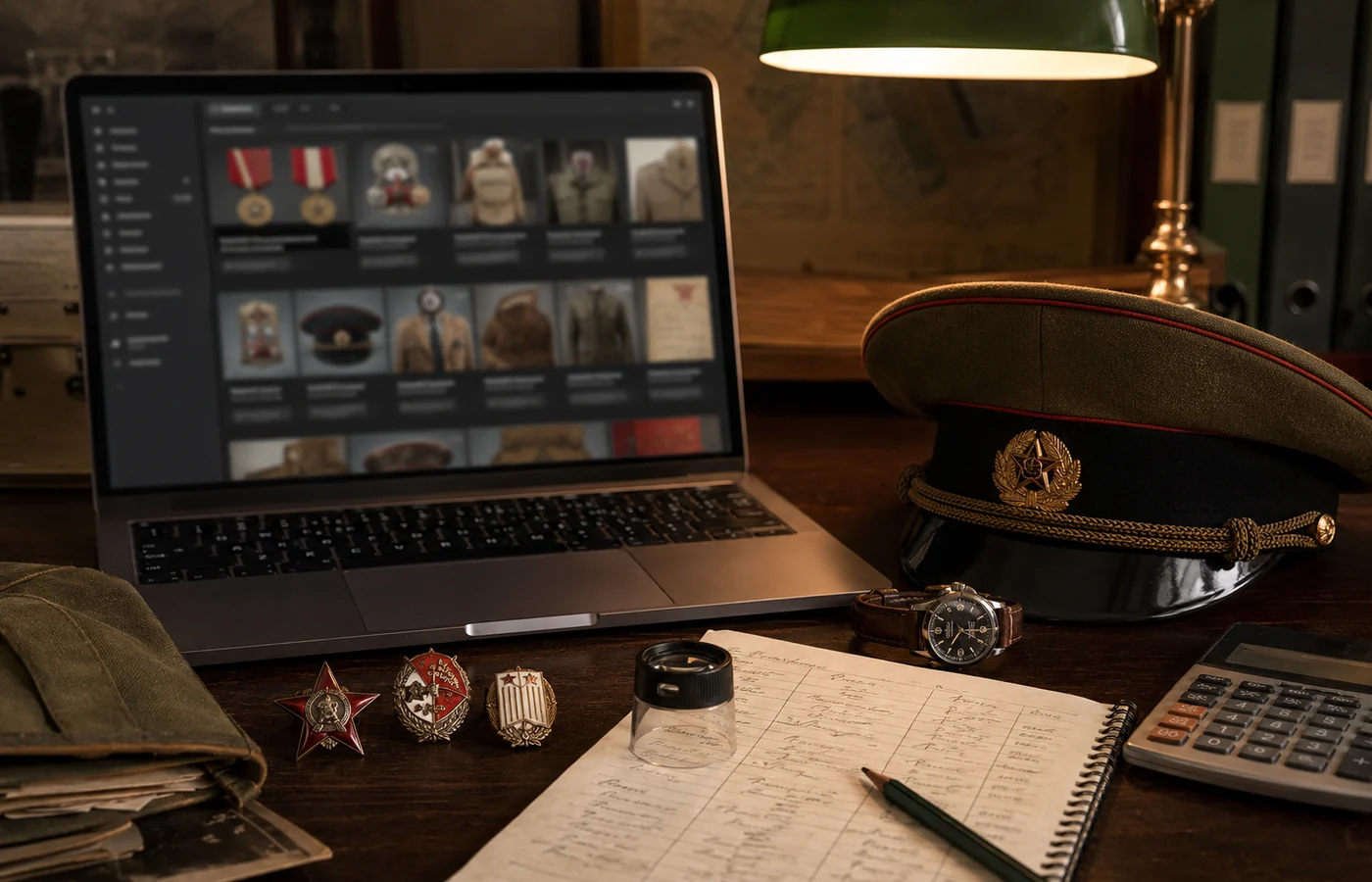
Value depends on exact type, condition, completeness, provenance, current supply and whether collectors trust the assembly. Record comparable sales instead of relying on the highest listing you can find.
Preservation
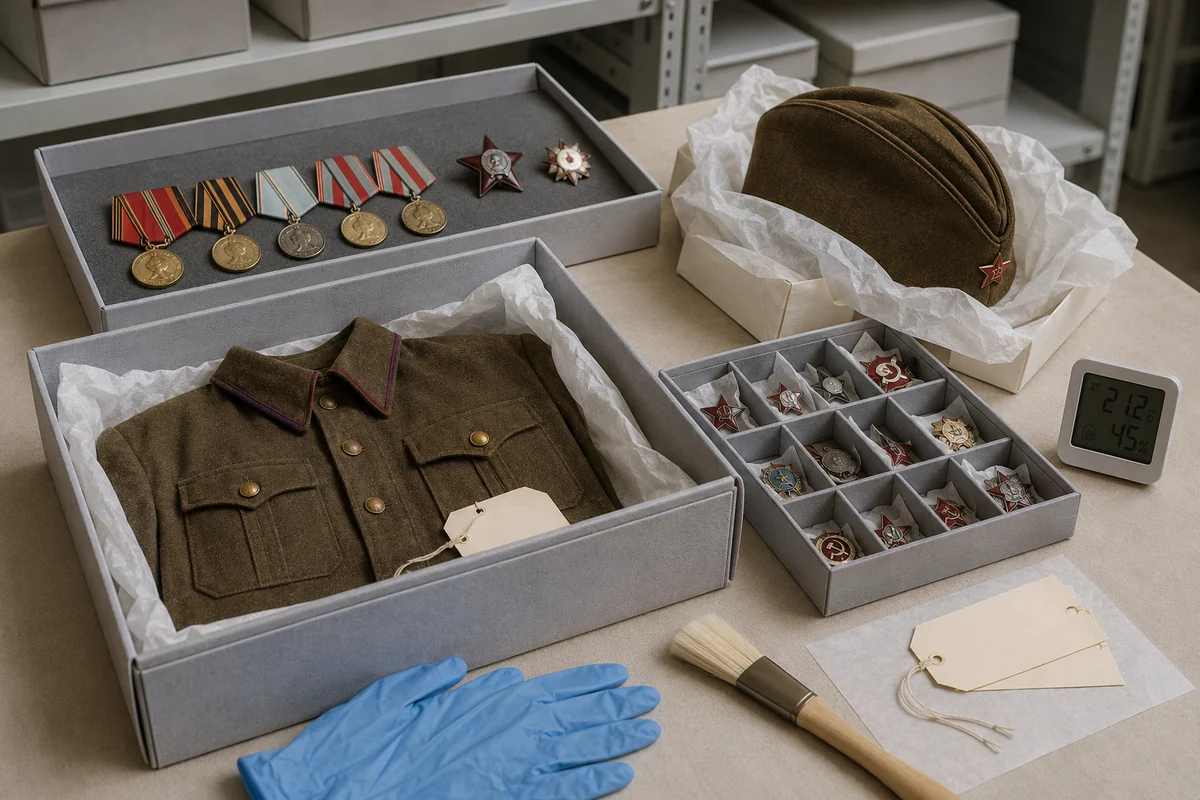
Collectors often damage objects while trying to improve them. Use reversible supports, control humidity, isolate unstable materials and document condition before cleaning anything.
Collector safety
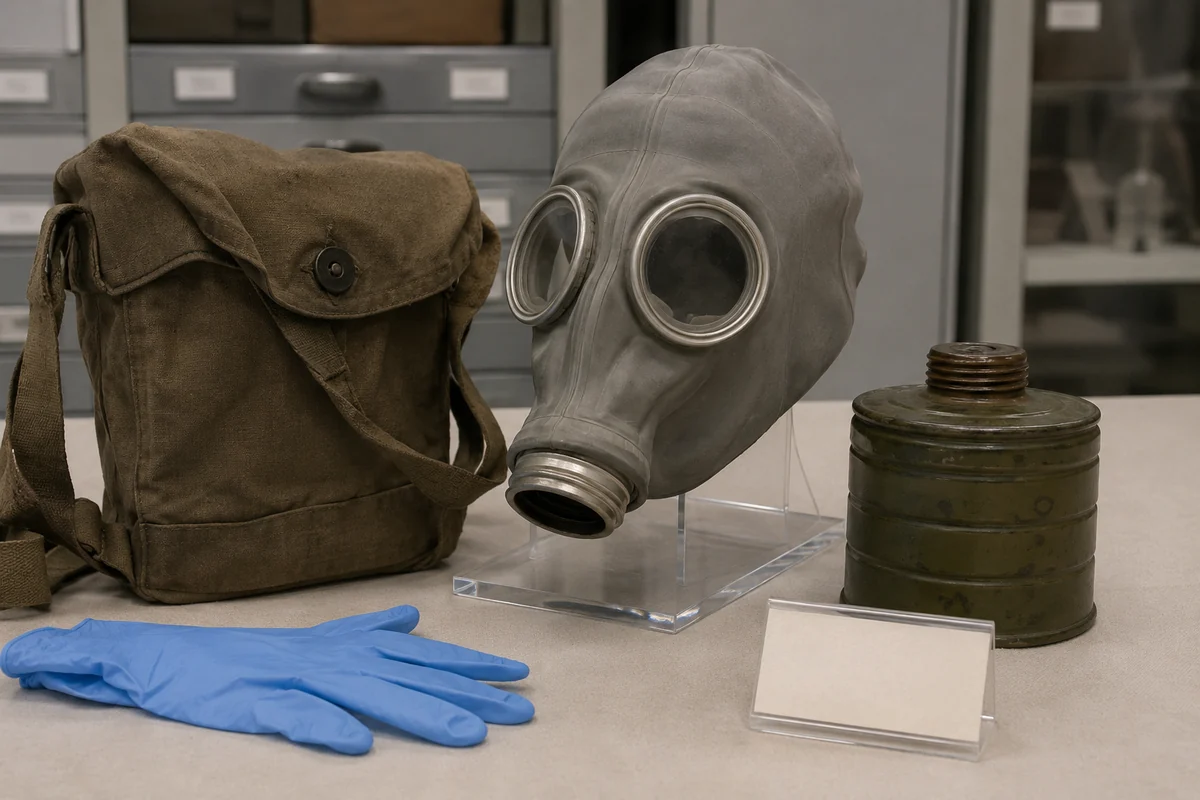
Old masks, filters and unidentified field objects may contain degraded or hazardous materials. Do not breathe through vintage filters, test unknown devices or assume surplus equipment remains safe because it looks unused.
Focused guides for the questions collectors ask before spending money or changing an object.
Location, ink, layout and surrounding construction all matter more than a single readable number.
Read the workflow →Translate height and body measurements carefully because seller conversions can flatten period differences.
Read the guide →Test the relationship between ribbons, mounting, wear, documents and the seller’s claimed history.
Read the guide →“Mint” can mean preserved, assembled yesterday or simply never inspected closely.
Compare clues →A repeatable photo sequence makes remote opinions more useful and protects the object’s record.
Use the checklist →Capture date, condition, completeness, provenance, shipping and final price for each comparable.
Open value research →